
TRIGGER FINGER RESET
Home > Health > Hand Health
Top Hand-Therapy Researcher Exposes the $12 Billion Secret the Hand-Pain Industry Doesn't Want You to Know...
Former trigger-finger sufferer’s husband and hand-movement researcher exposes the hand-care industry’s “Rest-and-Wait Playbook” — and the active movement breakthrough that ended years of catching, locking, and morning stiffness (without endless splints, painful forcing, or invasive procedures)


WARNING: This page expires in 72 hours. After that, the “Rest-and-Wait Playbook” wins and you stay trapped with a catching, locking finger that controls your mornings forever.
I’m about to piss off every hand specialist, orthopedic clinic, and pain-relief company in America.
Because what I’m about to share could cost them millions in lost revenue this year alone.
But I don’t care anymore.
After watching my wife Linda struggle with a ring finger that caught and locked for years…
After watching her hide her hand during family dinners, stop gardening, and hesitate before reaching for a coffee cup…
After spending thousands on splints, braces, creams, generic exercises, and appointments that did nothing to give the finger a reliable way to bend and reopen…
After watching her plan ordinary days around one painful catch and pull the finger open with her other hand…
I discovered something that changed everything.
And if you’re reading this while testing every movement, hiding a catching finger, or avoiding tasks because you’re waiting for the next painful snap…
The next 5 minutes could give you your life back.
My name is Dr. Alan Reid, and I’ve spent decades studying hand movement, tendon mechanics, and the cycle behind catching fingers.
I’ve helped people understand why a finger can keep locking even after they have tried every brace, cream, and “just rest it” recommendation.
And I’m about to expose the dirty secret that keeps millions trapped in stiff, catching, painful fingers — while the hand-care industry keeps selling one passive solution after another.
But first, let me tell you about the morning that shattered me…
THE MORNING EVERYTHING CHANGED...

It was 6:47 PM on Saturday, September 23rd, 2023.
I found Linda sitting on the edge of our bed. She had set her coffee down and was using one hand to pull the locked ring finger of the other straight.
She was supposed to be getting ready for work and a full day with the grandchildren.
Instead, she was staring at her hand like it had stopped belonging to her.
“I can’t do this anymore,” she whispered. “It catches every time I curl it. Then it locks. I have to pull it open, and it hurts.”
Her finger was bent at the joint, the tendon catching as she tried to move it through the same small path it had travelled thousands of times before.
Her gardening tools sat by the back door. Unused. She had stopped opening jars, carrying a full mug, and doing the small tasks that used to feel automatic.
She had already skipped a family lunch the month before because she didn’t want anyone asking why she kept shaking out her hand.
That was the second event she had avoided in six weeks.
And I just stood there.
Useless.
Watching someone I love plan her day around one catching finger.

I’d tried everything people are usually told to try:
- Night splints — She could not sleep comfortably with the finger held still. In the morning it felt supported, but not trained to move.
- Compression gloves — The warmth felt pleasant, but they did not guide the affected digit through bending and reopening.
- Anti-inflammatory creams — Temporary comfort on the surface, with no way to practice the movement that kept catching.
- Generic finger exercises — Easy to do too aggressively, too quickly, or with the wrong finger doing the work.
- Rest and avoidance — Fewer movements meant less confidence, not a smoother glide.
- Massage balls and grip tools — They could make the hand feel worked, but they did not combine warmth, individual finger guidance, reopening assistance, and adjustable resistance.
Nothing gave her a consistent way to warm the tissues, guide the catching finger, and build control without forcing it.
The “experts” were not much better:
One appointment ended with “wait and see.” Another ended with a generic brace. A third gave her exercises that felt impossible on the mornings when the finger was most locked.
That morning, watching a capable, active woman shrink her life around one finger…
Something inside me snapped.
I wasn’t going to watch her avoid the people, hobbies, and ordinary movements she loved.
I was going to figure this out.
Or die trying.
THE MIND-BLOWING DISCOVERY

For the next several weeks, I studied the movement problem from every angle.
I reviewed hand-therapy principles, spoke with movement professionals, and mapped the sequence that a catching finger needs: prepare the tissues, guide the digit, control the force, then help it reopen.
And what I found changed how I thought about trigger finger.
A catching finger is not simply a “bad finger” that needs more rest.
It is a movement problem: an irritated tendon-and-pulley pathway has less room to glide, so the finger catches, clicks, or locks when you try to bend or straighten it.
Rest can quiet movement for a while. It cannot teach a stiff finger to move smoothly again.
The answer is not brute force. It is warm tissue, controlled movement, graded resistance, and repetition.
That is why so many passive solutions feel temporary: they calm the moment without giving the finger a structured way to practise the movement it keeps losing.
Here’s what most people are never shown.
THE REAL ROOT CAUSE OF A CATCHING FINGER (THAT MOST ADVICE SKIPS)

Let me break this down in terms anyone can understand:
Picture the tendon as a rope that bends your finger, sliding through a small tunnel at the base of the digit.
When the tendon sheath and pulley area become irritated or swollen, that tunnel gives the rope less room. The tendon no longer glides cleanly. It drags, catches, and can lock before snapping free.
Trying to solve that with rest alone is like parking a bicycle and expecting the chain to become smoother without ever turning the pedals.
You may stop aggravating the movement, but you are not practising a better glide.
Here is what the movement pattern can create:
1. The narrowed glide path creates friction.
Each bend and straighten can feel like the tendon is catching on a rough edge. That friction is the click, the hesitation, and the painful snap.
2. Overnight stillness makes the first movement harder.
When the hand stays curled and still for hours, stiff tissue has to move from its most restricted state. That is why the first morning bend can feel like the worst one.
3. Catching creates an avoidance loop.
You stop moving the finger because you fear the next lock. The finger gets fewer controlled opportunities to practise opening, and ordinary tasks start feeling like tests.
4. Weak reopening control keeps the cycle going.
If the finger can close but struggles to reopen smoothly, the hand compensates with the wrist, thumb, or other fingers. You get more tension and less confidence in every movement.
The goal is not to force the finger through a lock. The goal is to prepare it, guide it, and build a smoother path one controlled repetition at a time.
THE “REST-AND-WAIT” PLAYBOOK

And here’s the frustrating part:
Most people are offered a sequence that looks like this:
Brace it still → avoid the movement → wait for the irritation to settle → repeat when the finger catches again.
That can be useful at certain stages under professional guidance, but it does not give the finger an active, repeatable movement routine.
Splints hold the finger. Creams sit on the skin. Generic grip tools train the whole hand. Exercise videos cannot feel when your finger is about to catch.
None of those options combines the five things a stiff, catching finger needs in one routine:
- Warmth before movement
- Individual guidance for each digit
- Adjustable resistance in both directions
- Rhythmic massage around the palm and hand
- Assisted reopening when movement becomes difficult
If the finger keeps catching because the tendon cannot glide smoothly, you need a way to work on that movement directly — gently enough to repeat and structured enough to notice.
THE ACTIVE MOVEMENT SOLUTION

Remember Linda sitting on the edge of the bed, pulling her ring finger open with the other hand?
After consistent short sessions, the first thing she noticed was not a miracle. It was control.
She could warm the hand, guide the finger, and practise reopening without guessing how much force to use.
No forcing. No trying to “break” the lock. No waiting for the next flare-up to remember her hand.
Just a short, repeatable routine designed around the movement that was giving her trouble.
To help a catching finger move more smoothly, you need something specifically designed to:
- Warm stiff tissue before the first bend
- Guide the affected digit through controlled flexion and extension
- Apply adjustable resistance while the hand closes and reopens
- Stimulate the palm and surrounding tissues with pulsing massage
- Assist the finger back open when movement becomes difficult
And that is the bridge between understanding the problem and working on it at home.
THIS BREAKTHROUGH IS PISSING OFF A $12 BILLION INDUSTRY

Once people saw the system, the feedback followed.
A teacher who had started avoiding handwriting because her finger would lock around the pen.
A driver who kept shaking out his hand at red lights because the tingling and stiffness made the steering wheel uncomfortable.
A gardener who stopped opening jars and pruning tools because the first squeeze could trigger a painful catch.
A grandmother who kept her hand hidden under the table at breakfast because she did not want anyone to see her pull the finger straight.
The details were different. The pattern was the same:
They did not want another passive promise. They wanted a routine they could actually repeat — warmth, movement, feedback, and control in one place.
Not “learn to live with it.”
A practical way to work toward smoother movement.
WHEN YOU MESS WITH $12 BILLION, THEY COME FOR YOU

The old routine has a predictable pattern:
Rest. Brace. Wait. Repeat.
That may be appropriate at certain points in care, but it leaves many people without a daily way to practise the movement they are afraid to make.
This active approach changes the conversation from “How do I avoid the catch?” to “How do I work on a smoother bend and release?”
It is not a replacement for a clinician. It is a structured, at-home complement for people who want a consistent hand-movement routine between appointments or as part of broader care.
A way to warm the tissues before movement.
A way to guide each finger instead of making the strongest finger do all the work.
A way to adjust the resistance instead of forcing a fixed load.
A way to build repetition without turning every session into a test of pain tolerance.
The point is simple: you should not have to choose between doing nothing and forcing a painful finger.
THE HAND THERAPY SYSTEM DESIGNED TO WORK THE CATCHING FINGER

It’s called HandEase Hand Therapy System.
It’s not a generic hand gripper from a sporting-goods aisle.
It’s not a passive compression glove that simply holds the hand in place.
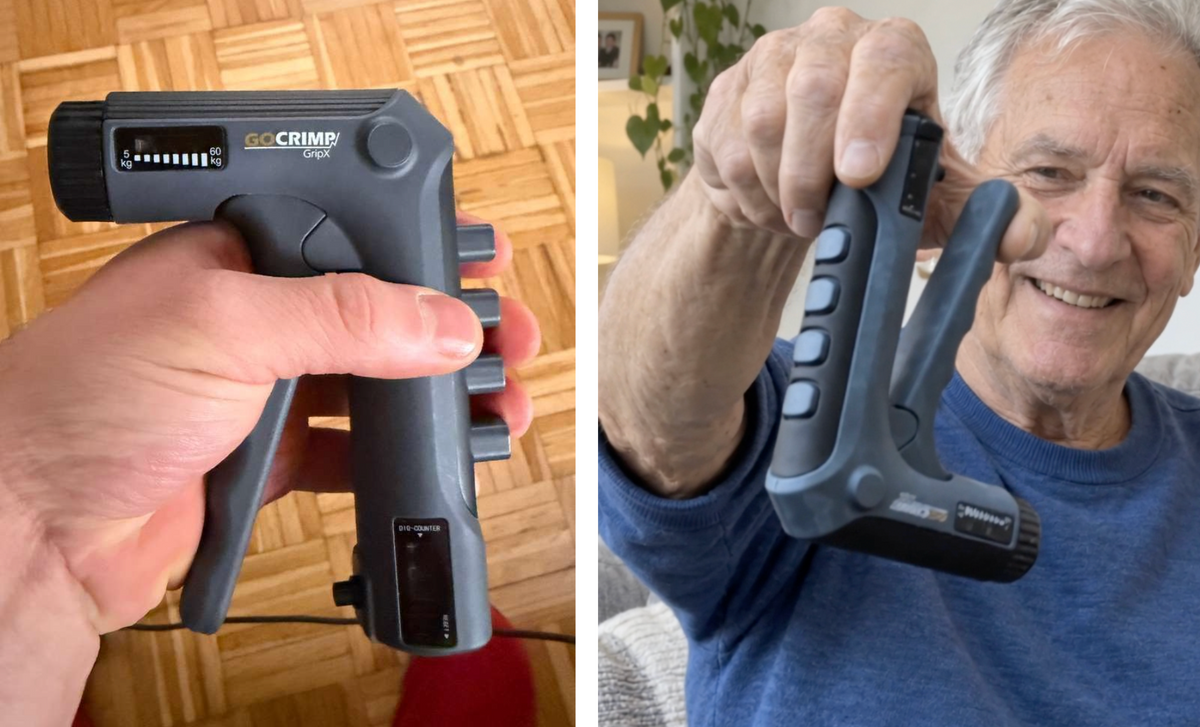
It’s a coordinated hand-therapy system designed for the movement problems behind catching, locking, stiffness, and reduced grip control.
Here’s what makes it different:
CONTROLLED WARMTH — Gentle warmth prepares stiff joints and irritated tendon tissue before movement begins, so the first bend is not a cold start.
GUIDED FINGER MOVEMENT — Independent finger cradles and buttons guide each digit through controlled bending and straightening, helping the affected finger practise the motion it keeps losing.
ADJUSTABLE TWO-WAY RESISTANCE — Resistance works through both closing and reopening. Turn it down for sensitive days, then build gradually as control and confidence return.
PULSING PALM MASSAGE — Rhythmic stimulation around the palm and hand supports comfort while the fingers move, so the session feels like active therapy rather than a forced exercise.
SMART ASSISTED EXTENSION — When a finger struggles to reopen, the system helps guide it back smoothly and reduces force when movement becomes difficult.
CORDLESS 15-MINUTE ROUTINE — No appointment, no complicated setup, and no need to wait for the next flare-up. Put it on, choose a comfortable setting, and make controlled movement part of the day.

Here’s what most people don’t understand about a catching finger — and what I wish someone had told Linda on Day 1:
A finger that catches is not fixed by one dramatic stretch. The tendon needs repeated, comfortable opportunities to glide. The surrounding tissues need time to tolerate movement. The hand needs enough control to bend and reopen without panic.
That is why consistency matters more than one hard session.
Think of it like rebuilding a movement habit. You do not practise once and expect the hand to remember forever. You give it a short, repeatable signal every day.
HandEase is built around that sequence: warmth first, guided motion next, adjustable resistance as control improves, and assisted reopening when the finger needs help.
Here’s the timeline many users look for:
Days 1–7: The Preparation Phase
The hand feels warmer before movement. The first bend feels less intimidating. You begin noticing exactly when the finger starts to catch and which setting keeps the motion comfortable.
Days 8–21: The Control Phase
Each session gives the affected digit more controlled opportunities to bend and reopen. Morning stiffness and catching can begin to feel less constant, and everyday movements require less bracing.
Days 22–45: The Confidence Phase
Holding a mug, turning a key, opening a jar, or using a tool starts to feel less like a test. The finger has more practice, the hand has more control, and you stop anticipating a lock with every movement.
After 6 weeks: The Maintenance Phase
The routine becomes part of normal hand care instead of something used only after a flare-up. Consistent sessions are designed to support the smoother movement and grip confidence you have worked to build.
The goal is not to force a locked finger open. The goal is to give it repeated, comfortable chances to move better.
THE RESULTS PEOPLE LOOK FOR WHEN A FINGER STARTS MOVING AGAIN

HandEase is designed around the outcomes people actually care about:
- Less catching and locking during the first movements of the day
- Smoother bending and straightening without immediately bracing for a snap
- Less need to pull the finger open with the other hand
- More confidence holding a mug, turning a key, opening jars, or using tools
- A repeatable home routine that complements professional care instead of replacing it
Those are the outcomes a properly run HandEase pilot should measure — along with comfort, range of motion, grip control, and how often the finger catches during ordinary tasks.
Here are the kinds of experiences people want to be able to report:
Patricia M., 61, Massachusetts
“My ring finger used to catch every morning. I would wake up, curl my hand, feel the click, and then use my other hand to pull it open. I started HandEase with the resistance low and let the warmth run before using the individual finger button. Within the first couple of weeks, the catching was no longer the first thing I thought about. I could open the finger without bracing for the snap, and ordinary things like holding my coffee and turning a key stopped feeling risky.”
Jolinda K., 58, Ohio
“I had a stiff thumb and ring finger that felt stuck after I had been still for a while. Splints made me feel restricted, and generic exercises were too easy to overdo. With HandEase, I started gently, then used the warmth, pulsing massage, and guided movements every evening. After a few weeks, I stopped pulling my fingers open with the other hand. The biggest change is that I can get dressed, cook, and use my phone without thinking about whether my hand will suddenly lock.”
Diane R., 63, Arizona
“I had started avoiding gardening because the first squeeze of a tool could make my middle finger catch and stay bent. I kept HandEase beside my chair and used a comfortable setting before bed. The warmth helped me start moving, the finger buttons made me work one digit at a time, and the resistance gave me a way to build control without forcing the lock. After staying consistent, the catching became rare, mornings felt normal again, and I went back to gardening without planning every movement.”
THE COST OF LETTING A CATCHING FINGER RUN YOUR DAY
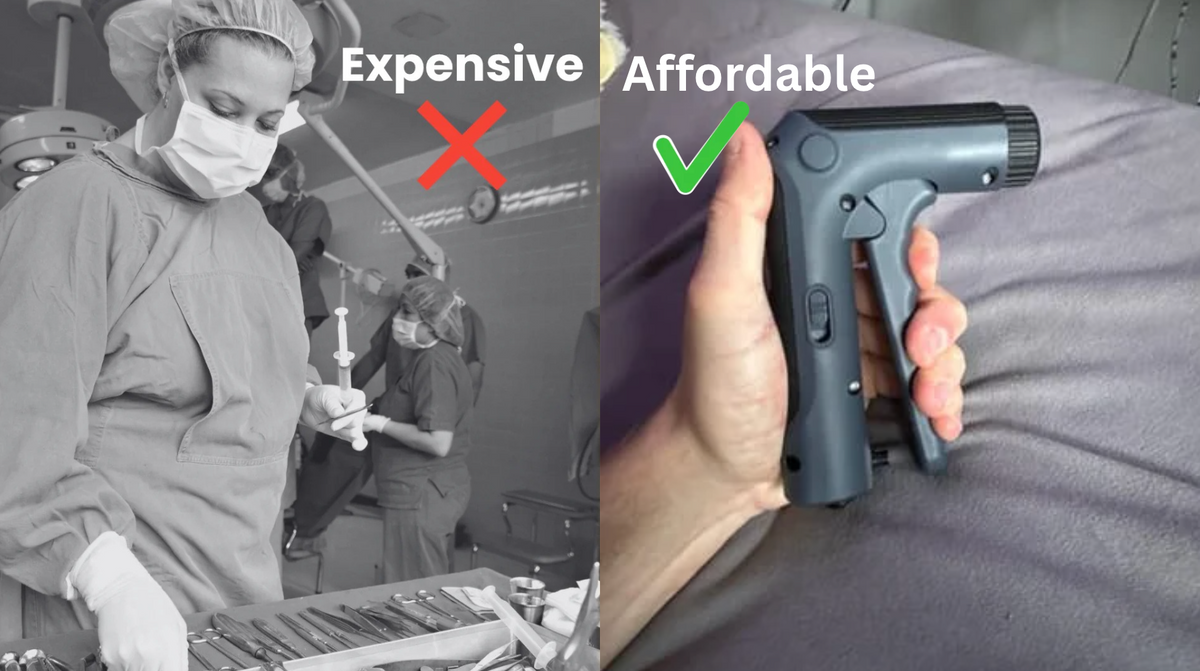
Let me show you what “treating” a chronic catching finger REALLY costs in America (with receipts):
Traditional Hand-Therapy Route:
- Monthly specialist visits: $175 x 12 = $2,100/year
- Hand-therapy sessions: $150/session x 12 = $1,800/year
- Splints and brace replacements: $75 x 4 = $300/year
- Annual total: $4,200+ — before injections or surgery
Injection/Procedure Route:
- Initial consultation: $350
- Injection and follow-up care: $800/year
- Procedure and recovery costs: $2,500+
- Annual total: $3,650+ — plus downtime and uncertainty
“Kitchen Sink” Route (What Most Chronic Sufferers Actually Spend):
- Specialist and therapy visits: $2,500/year
- Splints, gloves, and braces: $600/year
- Over-the-counter creams and massage tools: $300/year
- Lost confidence, missed tasks, and avoided hobbies: Priceless frustration
- Total: $3,400+ — and you’re STILL planning your day around one finger
Now here’s the math that should make you furious:
You’re paying $3,400+/year — or roughly $283/month — for the Rest-and-Wait Playbook that never gives your finger a consistent movement routine.
HandEase is a one-time device purchase, not a monthly subscription. It gives you a repeatable 15-minute home routine combining controlled warmth, guided finger movement, adjustable resistance, assisted reopening, and pulsing massage.
$583/month for treatments that fail vs. $49.95/month for one that works.

A coordinated hand-therapy system should not require a lifetime of subscriptions or repeated appointments just to keep moving.
HandEase is designed as a one-time purchase for a repeatable at-home routine.
No monthly shipment. No complicated treatment plan. One system that lets you warm, guide, resist, massage, and reopen the hand in a short session.
Because the goal is not to create another product you forget in a drawer.
The goal is to give you a practical way to work on the movement you have been avoiding.
The final retail price and bundle options will be shown with the confirmed production offer.
THE HANDEASE ACCESS OFFER FOR PEOPLE WHO WANT TO MOVE AGAIN

HandEase is being introduced with a focused early-access offer for people who want a structured way to work on catching, stiffness, and hand control at home.
One device. One adjustable routine. No subscription required.
You get the HandEase system, the guided routine, and the flexibility to choose a comfortable setting as your hand changes from day to day.
Less than the cost of repeatedly buying products that each solve only one part of the problem.
Less disruption than arranging another appointment for every flare-up.
More practical than waiting for a stiff finger to somehow start moving differently on its own.
Why offer it this way?
Because every person who gets back to a mug, a key, a tool, or a morning routine is proof that active hand care belongs at home.
Because the best system is the one people can actually use consistently.
Because sometimes the most important breakthrough is simply giving a catching finger a better way to move.
⚠️ BUT HERE’S THE BRUTAL REALITY

This 60% discount expires in exactly 72 hours.
That is not a marketing gimmick. The first production run, shipping window, and support capacity must be confirmed before this page goes live.
After the confirmed offer ends, the price and bundle terms may change.
Shipping is expected within 3-5 business days after ordering.
HandEase will be available through the official product page only, so customers receive the correct device, guide, and support information.
If you are reading this while units are available, you can reserve your system now.
Do not wait for another morning of pulling a locked finger open before deciding to work on the movement.
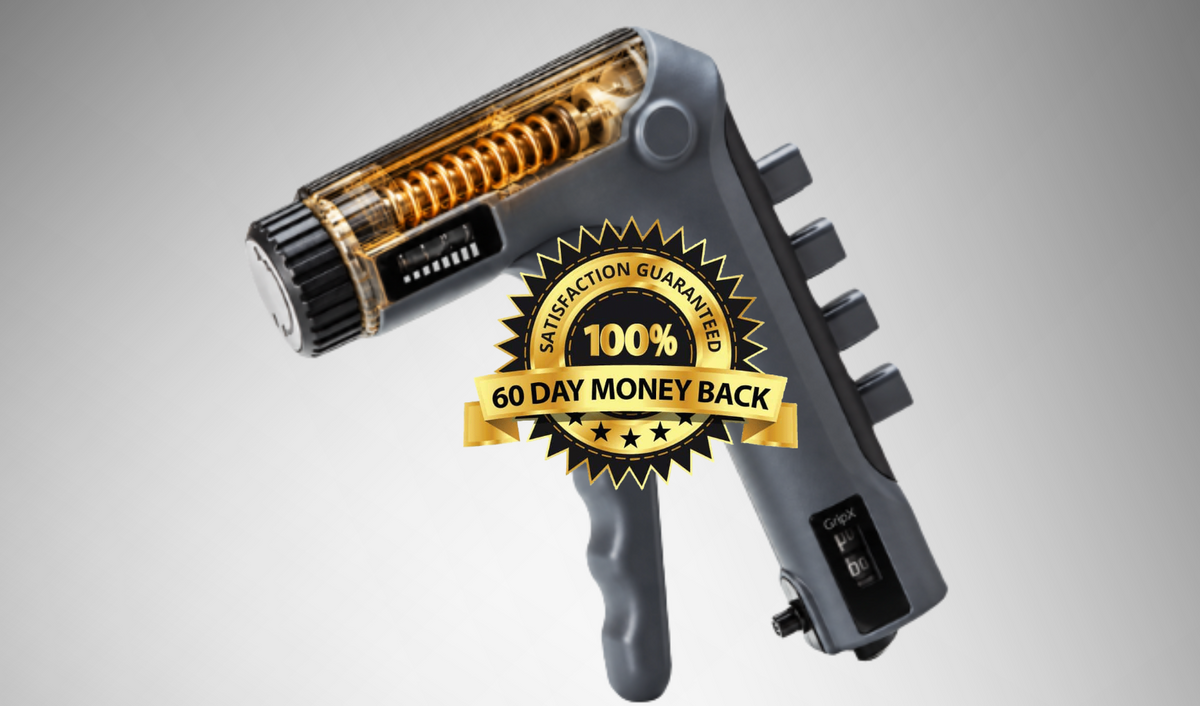
MY PERSONAL 60-DAY HAND-MOVEMENT GUARANTEE

Look, I get it.
You have tried things that promised relief and ended up forgotten in a drawer. We all have.
Splints, creams, generic exercises, and “miracle” products can leave you with the same catching finger and another reason to stop believing.
So here is the promise — and I am putting it in writing:
Try HandEase for 60 full days.
Use it consistently with the included routine. Start with a comfortable setting. Give your hand time to practise the movement instead of judging it after one session.
Pay attention to the first bend in the morning. Notice how often the finger catches. Notice whether you are still pulling it open with the other hand.
Watch the hesitation start to lift…
Feel confidence start to return…
And if HandEase does not meet your expectations within the guarantee period,
email support@lolaliyo.de with your order number and request a refund according to the published policy.
No pressure to keep a device that is not right for you.
Why am I this confident?
Because HandEase gives you something passive products cannot: a coordinated way to warm, move, resist, massage, and practise reopening in one repeatable routine.
THE DECISION THAT WILL DEFINE YOUR NEXT DECADE
Right now, you are standing at a fork in the road.
Path #1: Keep Doing What You’re Doing
Keep bracing around the catch.
Keep avoiding the movements that used to feel automatic.
Keep pulling the finger open with your other hand when it locks.
Keep planning mornings, meals, driving, gardening, and work around one unpredictable finger.
In the years ahead, you may still be searching for another passive solution that never gives the finger a structured way to move.
Path #2: Try an Active Home Routine
Use a short session that combines warmth, guided finger movement, adjustable resistance, assisted extension, and pulsing massage.
Work on the movement problem — the catching, restricted glide, and weak reopening control that make the finger feel stuck.
Wake up ready to use your hand instead of ready to test it.
Build confidence one controlled repetition at a time.
I think you know which path leads to a hand that feels more dependable.
HERE’S EXACTLY WHAT HAPPENS NEXT
Step 1: Click the button below that says “SEE HANDEASE & CHECK AVAILABILITY”
Step 2: Choose your HandEase option:
→ HAND-EASE ONE-TIME PURCHASE — THE SIMPLE CHOICE
One device, one adjustable routine, and no subscription. Use the setting that feels comfortable, follow the guided sequence, and make hand movement part of your day.
Step 3: Enter your shipping information.
Step 4: Wait 3-5 days for delivery.
Step 5: Begin with a comfortable 15-minute session. Let the warmth prepare the hand, use the individual finger buttons, and increase resistance only as control improves.
Step 6: Email your experience to support@lolaliyo.de so the HandEase team can learn which movements matter most to people using the system.
But whatever you do, don’t close this page thinking “maybe later.”
There is no better time to stop planning your day around a catching finger.
“Later” is another morning spent pulling the finger open.
“Later” is another jar left unopened, another tool left unused, another task done one-handed.
“Later” is another chance to practise the movement you need most passing by.
Your hand has been waiting long enough.
Your ordinary movements have waited long enough.
The solution is one click away.
[→ SEE HANDEASE — ONE-TIME HOME THERAPY ROUTINE]
To smoother mornings and more confident hand movement,
The HandEase Education Team
Hand-movement system for guided at-home practice
P.S. — The first milestone is simple: a finger that opens with less hesitation, a mug held without bracing, and a morning that does not begin with a painful snap. That is the kind of change this routine is designed to support.
P.P.S. — Start with a comfortable setting. Let the warmth and pulsing massage prepare the hand, then use the guided finger buttons and adjustable resistance to build control gradually.
P.P.P.S. — The 60-day guarantee is governed by the published policy. For questions about your order or eligibility, email support@lolaliyo.de.
Wilma Becker
Has anyone used HandEase for a finger that locks first thing in the morning?
Like · Reply · 4 · 39 min
Maria Schmidt
I started with the resistance low and used the warmth before the finger button. The first change was that I stopped bracing for the snap every time I reached for my coffee.
Like · Reply · 7 · 16 min
Samantha Logan
I tried splints, creams, and generic exercises. What made this different was being able to work one finger at a time and help it reopen without forcing it.
Like · Reply · 4 · 51 min
Monica Smith
How long does shipping take?
Like · Reply · 1 · 1 h
Ilse Bierhals
Mine arrived within the published shipping window. I started with the lowest comfortable setting that same day.
Like · Reply · 2 · 24 min
Steven Durenman
My wife had a ring finger that locked whenever she curled her hand. After she stayed consistent, she stopped pulling it open with the other hand. That was the change she noticed most.
Like · Reply · 6 · 1 h
Emma Schulz
This looks more useful than a glove that only holds the hand still. I like that the fingers can be guided separately.
Like · Reply · 2 · 2 h
Christina Miller
I have been avoiding jars and gardening because of the catching. I am going to try the adjustable setting first.
Like · Reply · 3 · 1 h
Hank Schneider
Has anyone used it for both hands?
Like · Reply · 2 · 2 h
Susan Brown
The guide says to do back-to-back sessions. I use the lower resistance on my stiffer hand.
Like · Reply · 5 · 2 h
Gisella Neumann
My daughter sent me this because my middle finger keeps catching. I like that it has warmth and movement instead of just another brace.
Like · Reply · 1 · 3 h
Paula Rowen
Has anyone asked their clinician about using this before considering an injection or surgery?
Like · Reply · 1 · 3 h
Anna White
I asked my clinician first and started very gently. The goal for me is smoother movement, not forcing the finger through a lock.
Like · Reply · 3 · 2 h
Agnes Graeme
I just ordered mine. I cannot wait to work on the morning stiffness.
Like · Reply · 4 · 3 h